In this guide
Describe injury, swelling, locking, and pain
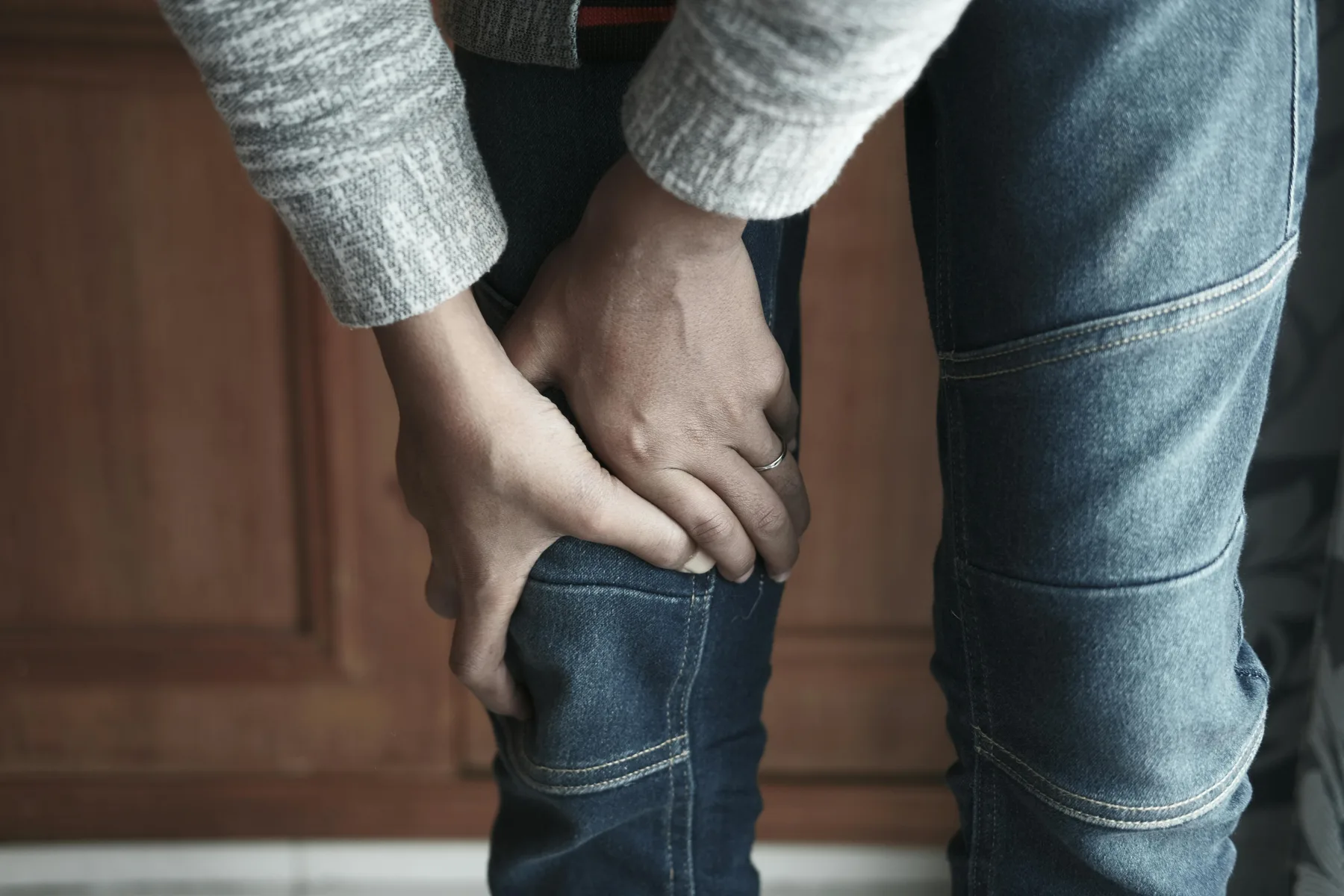
Describe where the pain occurs, how it started, and whether there is swelling, catching, giving way, or a true inability to straighten the knee. Record recent changes in running, stairs, work, or lifting. Include any injury and relevant treatment restrictions.
Advice for diagnosed osteoarthritis cannot be applied automatically to an acute ligament injury, a hot swollen joint, patellar tendinopathy, or a mechanically locked knee. If the cause is unclear or function is declining, seek an assessment before progressing a generic routine.
Adjust chair rises, steps, and walking
A chair rise provides several useful variables. A higher firm seat reduces the depth required. Arm support shares the work. A slower pace changes the effort and time under load. Secure the chair against movement and start with a few repetitions at a comfortable demand.
During stepping, lower the step height or use a handrail. During walking, choose a manageable route and planned breaks. Record assistance and setup so later improvement reflects more than using a different chair or route.
| Task | Make it more accessible | Build the intended demand |
|---|---|---|
| Chair rise | Higher seat or arm support | Less assistance, more load, or a different seat height |
| Stairs | Handrail, lower practice step, fewer trips | Relevant step height, repetitions, or carrying demand |
| Walking | Shorter route and available rest | Duration, frequency, terrain, or pace |
| Squat or lift | Comfortable depth and load close to the body | The range and force needed for the specific lift |
Use osteoarthritis evidence in its proper scope
NICE recommends therapeutic exercise tailored to the person, including local strengthening and aerobic fitness, for osteoarthritis.[1] Some discomfort may initially increase. Regular participation can help, but a worsening swollen joint or loss of function should not be dismissed as an expected training response.
A 2024 Cochrane review of 139 trials found average pain benefits of about 13 points out of 100 compared with no treatment, usual care, or limited education. Against attention or placebo controls, the difference was about 9 points. These results were measured after programmes of varying lengths. Certainty was low to moderate and the clinical importance of the benefits remained uncertain.[2] The comparison group therefore matters when someone quotes a single exercise success figure.
Interpret movement without a pass–fail label
Foot position, trunk angle, depth, speed, and load all change a knee task. Observe them to understand what the person is doing and how a modification affects comfort or performance. A video showing the knee move inward cannot isolate tissue stress or establish the cause of pain.
For a particular sport or rehabilitation goal, a clinician may deliberately coach a movement strategy. Ask which outcome the cue is meant to improve. A visually tidy repetition and a meaningful increase in capacity are different measures.
Build enough capacity for repeated activity
One comfortable set does not establish readiness for a full shift of stairs or a long hike. Progress toward the expected total demand, including repeated sessions and recovery. The loading guide explains how to track the dose without treating fixed percentages as universal rules.
Keep a record of activity, effort, swelling, symptoms afterward, and the next day’s walking or stair function. If the exercise is manageable but daily demands remain too high, adjust the overall week as well as the session.
When to seek care
Seek urgent assessment for a newly hot, swollen, painful knee, a knee that is locked and cannot straighten, major deformity, or inability to bear weight after an injury. Rapidly increasing swelling, recurrent giving way, or persistent loss of motion also deserves assessment.
References and evidence
- NICE NG226 · Osteoarthritis: recommendations (2022)
Tailored strengthening and aerobic exercise are core options for diagnosed osteoarthritis.
- Cochrane · Exercise for osteoarthritis of the knee (2024)
Benefit estimates depend on the comparison and outcome. These findings do not describe all causes of knee pain.